Value
Table of Contents
“Value” in Flesh and Blood is a term used by players to describe how much damage you are dealing or preventing by using one or more cards a certain way.
Attacking with Wounding Blow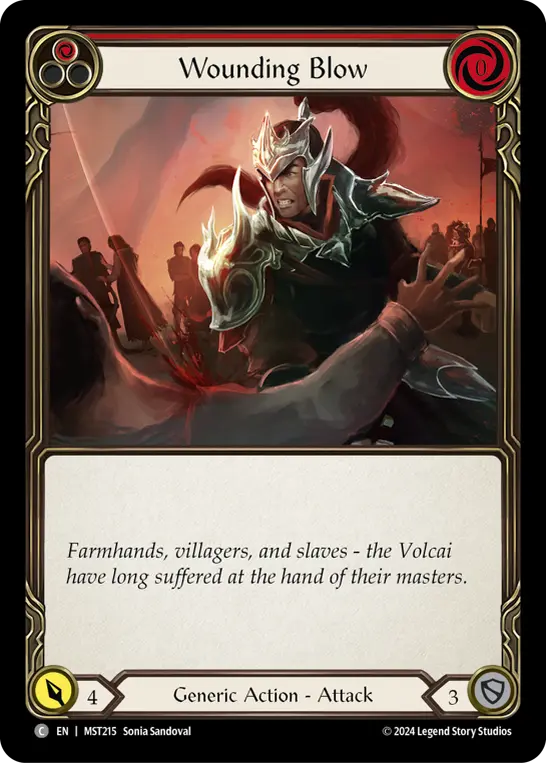 gives 4 value (a “1 card 4”), and defending with it gives you 3 value (a “1 card 3”).
Raging Onslaught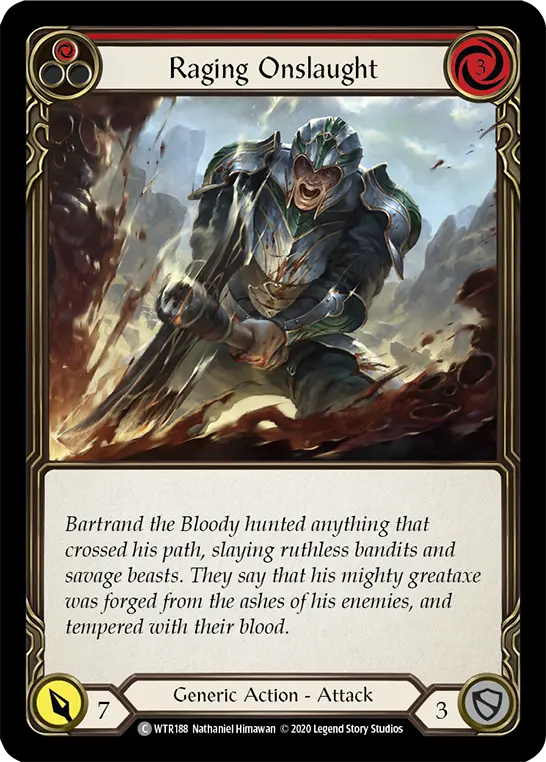 is a 7 value attack requiring you to pitch (ideally) one blue card (a “2 card 7”). Thus you get 3.5 value per card used.
Thunder Quake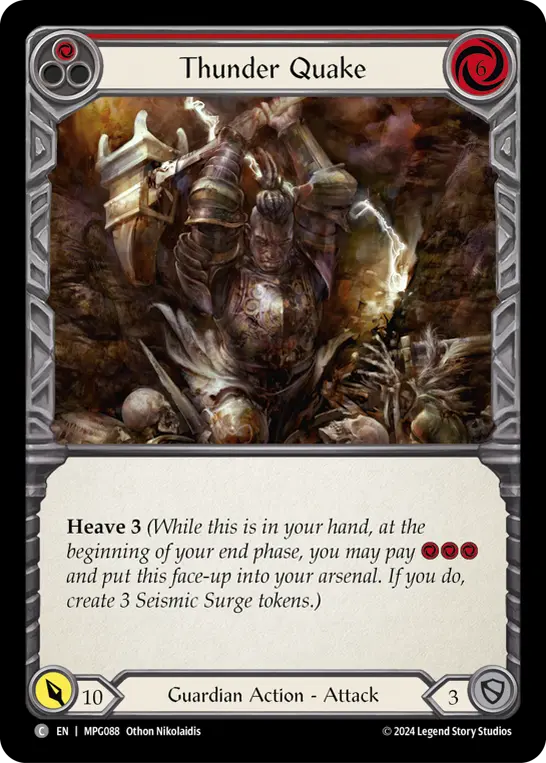 is a 10 value attack requiring you to pitch two blues (a “3 card 10”), landing at 3.33 value per card used.
These examples illustrates why it is commonly believed that higher cost cards are kinda worse than lower cost cards, all else being equal. You simply get less value per card when playing expensive cards, which comes in addition to the limitation that they can only be played if you have enough pitch cards available.
However, it’s important to consider what the rest of the cards in your hand are doing to get the full picture. If the cards you don’t play or pitch are used to defend for 3 each, Wounding Blow, Raging Onslaught and Thunder Quake alike will yield a total 13 value, or 3.25 per card.
Making value assessments is an important fundamental skill of Flesh and Blood. While you are learning it may feel cumbersome to consider every possible way to use a hand, but you will quickly develop rules of thumb that make it easier.
Special effects
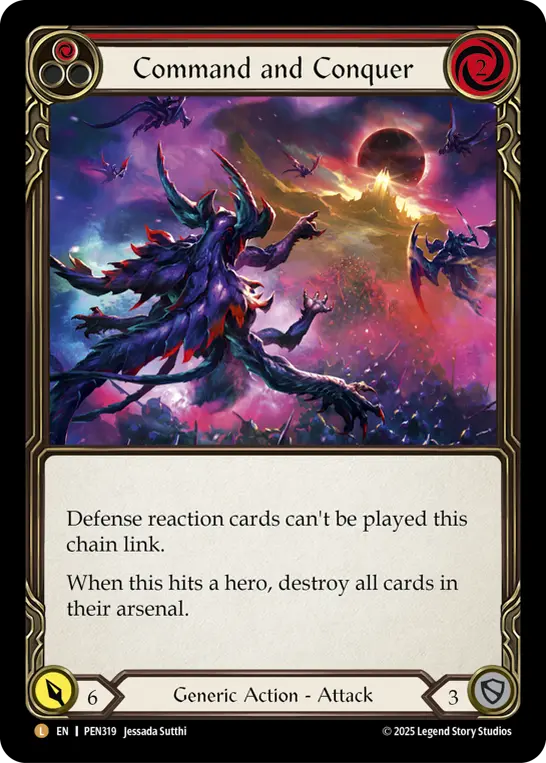
The determination of value gets more complicated once you consider effects other than raw damage and defense, such as drawing cards with In The Palm of Your Hand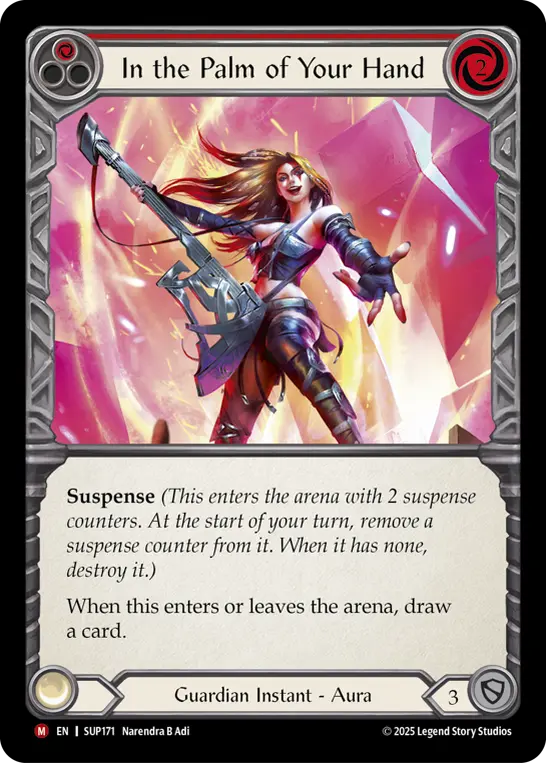 , taking away your opponent’s arsenal card with CNC
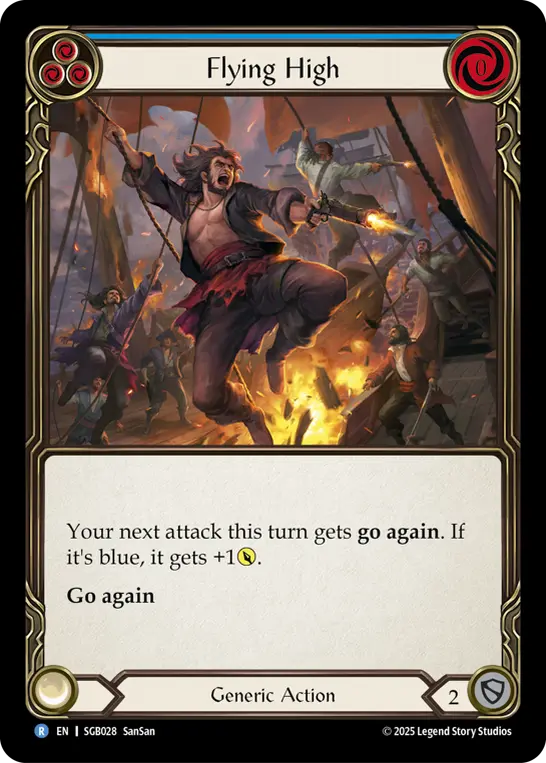
 , granting go again to another card with Flying High (blue)
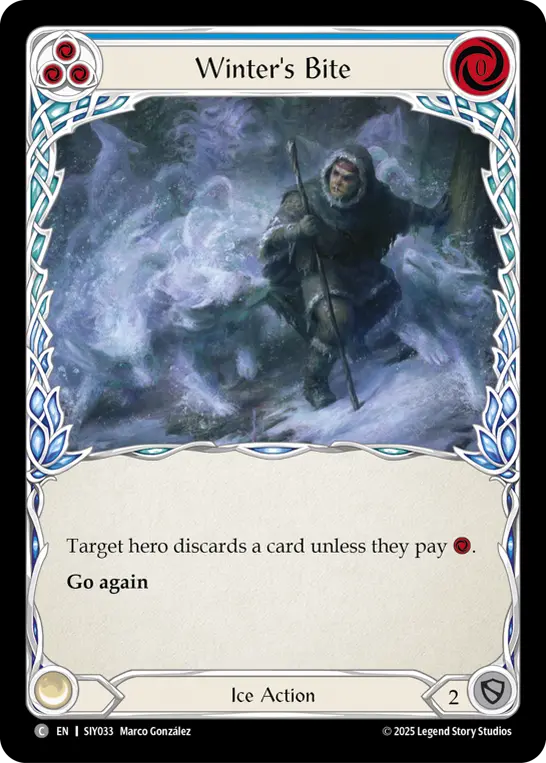
 , making your opponent pay a resource with Winter’s Bite (blue)
 , and so on.
Ultimately, quantifying these as a numerical value is guesswork and speculation. You can try to consider what outcomes are possible and calculate some kind of expected value, but it’s probably more useful to think about the real world impact of these effects in a more qualitative way.
Damage vs. defense
A beginner will often try to play each hand to the best total value possible, thinking that that will lead to victory. This is probably not viable for most Guardians most of the time.
In many matchups, you are rewarded for focusing mostly on preserving your own life. This is typically the case when the opponent has a weak late game, have significantly higher damage output than you and/or are vulnerable to disruption.
Thus, “hammer for 4” is not necessarily better than defending for 3, 2 or even 1 damage. Getting comfortable with this is an important “level up” for a Guardian player.